

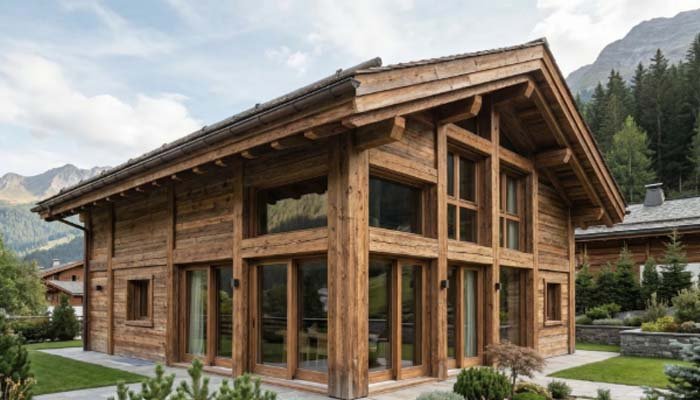
Reclaimed wood has a kind of presence that new materials rarely achieve. It carries visible texture, age, colour variation and signs of previous use, which can make a window frame feel like part of the building’s story rather than a neutral technical component. In interior architecture, this matters. Windows influence light, proportion, atmosphere and the relationship between indoors and outdoors, so the material chosen for them has a stronger visual and emotional impact than many people realise.
What Are Reclaimed Wood Windows?
How reclaimed timber differs from newly harvested wood
Reclaimed wood windows are made from timber that has already had a previous life. The material may come from old buildings, barns, industrial structures, beams, flooring, doors or other architectural elements. Instead of being sent to landfill, burned or downcycled into a lower-value product, the wood is recovered, assessed, cleaned and prepared for reuse.
This distinction is important because reclaimed timber is not simply “old wood”. It is a material with proven structural and aesthetic potential, provided it is properly selected and processed. For window production, the quality of the wood matters as much as its origin. The timber needs to be stable, dry, free from serious defects and suitable for precision joinery. When these conditions are met, reclaimed wood can become a high-quality material for frames, window surrounds, interior glazing systems and bespoke architectural details.
Why windows are an ideal application for reclaimed wood
Windows are one of the most expressive elements in interior design. They frame views, filter daylight and often become focal points in a room. A reclaimed wood frame can add depth to a minimalist space, soften a contemporary interior or reinforce the authenticity of a historic renovation. Unlike mass-produced synthetic frames, reclaimed timber has natural irregularities that give each window a distinct appearance.
The practical advantage is also significant. Timber is workable, repairable and adaptable. Skilled joiners can shape, restore and finish it with a level of precision that supports both traditional and modern window designs. This makes reclaimed wood especially suitable for projects where aesthetics, sustainability and craftsmanship need to work together.
Why Are Reclaimed Wood Windows a Sustainable Choice?
Reusing wood reduces pressure on new resources
One of the clearest environmental benefits of reclaimed wood windows is that they extend the useful life of an existing material. Every recovered beam or board used in a window frame reduces the need for virgin timber in that particular application. This does not remove the need for responsibly managed forests, but it does support a more balanced material strategy.
The Forest Stewardship Council explains that the FSC Recycled label provides assurance that wood or paper has been verified as genuinely recycled. For wood products carrying the FSC Recycled label, the material must be verified by a third-party certification body and made from at least 70% post-consumer reclaimed material, with the remaining content verified as pre-consumer waste. This shows how important traceability and verification have become in sustainable material claims.
Reclaimed wood supports circular design
Circular design is based on keeping materials in use for as long as possible. In practice, this means designing, renovating and building in ways that reduce unnecessary extraction, extend product lifespans and make future reuse easier. Reclaimed wood windows fit this approach because they bring an existing resource back into a high-value architectural application.
The European Commission’s current circular economy policy direction also reflects this broader shift. Recent measures include the “right to repair” entering into force in July 2024 and the Packaging and Packaging Waste Regulation entering into force in February 2025, both of which reinforce the importance of repair, reuse, secondary raw materials and circular business models across the European economy.
For interior architects and property owners, this means reclaimed materials are no longer a niche aesthetic choice. They are part of a wider movement towards resource-conscious design. Choosing reclaimed wood windows can help a project communicate that sustainability has been considered at the level of material selection, rather than added at the end through superficial styling.
Reuse helps reduce construction and demolition waste
The construction sector generates vast amounts of material waste. The EPA estimated that 600 million tons of construction and demolition debris were generated in the United States in 2018, which was more than twice the amount of municipal solid waste generated in the same period. Although this figure relates to the US market, it illustrates the scale of the issue clearly. Renovation, demolition and construction can produce huge volumes of potentially valuable material.
Wood is one of the materials that can be recovered and reused when projects are planned carefully. The EPA describes deconstruction as the careful dismantling of buildings to salvage components for reuse and recycling. It also states that recovering used but still valuable construction and demolition materials is an effective way to save money while protecting natural resources.
For windows, this has two implications. First, reclaimed timber can reduce the amount of wood discarded from previous projects. Second, using reclaimed material in a new window can reduce demand for newly manufactured frame materials. The environmental benefit depends on sourcing, transport, processing and final performance, but the principle is clear: keeping valuable timber in use is usually preferable to treating it as waste.
How Do Reclaimed Wood Windows Improve Interior Design?
They add texture, warmth and visual depth
Interior spaces often rely on a balance between hard and soft materials. Glass, concrete, metal and stone can create clean architectural lines, but they may also feel cold if they are not balanced with warmer surfaces. Reclaimed wood windows introduce grain, colour, patina and tactile richness. This can make a room feel more grounded and more comfortable.
The appeal of reclaimed wood lies in its variation. One frame may show traces of weathering, another may reveal dense grain or subtle tonal shifts caused by age. These details are difficult to reproduce convincingly with new materials. They give the interior a sense of depth, especially when combined with natural light.
They work across many interior styles
Reclaimed wood windows are often associated with rustic interiors, but their use is much broader. In a farmhouse-style home, they can reinforce a sense of authenticity. In an industrial loft, they can complement exposed brick, steel and concrete. In a Scandinavian or Japandi-inspired space, they can add warmth without overwhelming the clean design language. In a contemporary home, they can create a deliberate contrast with smooth walls, large glazing and minimalist furniture.
This flexibility is one of their strongest design advantages. Reclaimed wood does not need to make an interior look old-fashioned. When detailed carefully, it can feel refined, modern and highly intentional. The final effect depends on proportions, finish, glazing choice, hardware and the surrounding materials.
They create a stronger connection with the building’s story
A window made from reclaimed timber can carry historical and emotional value. This is particularly important in renovation projects, heritage buildings, boutique hotels, restaurants and private homes where atmosphere matters. Historic England notes that traditional windows can contribute to the significance of listed buildings through their design, materials and workmanship.
Even when a project is not formally historic, reclaimed wood can add a sense of continuity. It suggests that materials have been respected rather than replaced without thought. For interior designers, this can become a powerful storytelling tool. The window is no longer treated only as a technical opening in the wall. It becomes part of the spatial identity.
Are Reclaimed Wood Windows Durable?
Old timber can offer excellent stability when properly selected
Durability is one of the most common concerns about reclaimed materials. In the case of reclaimed wood windows, performance depends on selection, preparation and craftsmanship. Old timber that has remained stable for decades can be valuable precisely because it has already gone through long-term drying and seasoning. However, not every reclaimed board is suitable for window production.
Professional assessment is essential. The timber should be checked for moisture content, movement, biological damage, contamination, structural weakness and compatibility with the intended design. Once the right material is selected, it can be machined, repaired, laminated if needed, sealed and finished to meet the demands of everyday use.
Maintenance should be treated as part of the design strategy
Wooden windows require care, but this should not automatically be seen as a disadvantage. One of the benefits of timber is that it can often be repaired rather than fully replaced. Scratches, worn finishes, small areas of damage and surface ageing can usually be addressed through maintenance. This gives timber windows a long service potential when owners understand how to look after them.
Good maintenance includes appropriate finishing, regular inspection, protection from excessive moisture and timely repair of coatings. In demanding climates or exposed elevations, maintenance planning becomes even more important. For interior-facing applications, such as internal glazing, room dividers or windows within protected spaces, wear may be significantly lower.
Repairability gives reclaimed wood long-term value
Many modern products are designed around replacement. Timber, by contrast, supports repair. Historic England’s advice on older windows highlights the importance of assessing significance, conserving where possible and considering energy efficiency improvements alongside whole-life carbon costs. This approach is useful beyond heritage buildings. It encourages designers and property owners to think about the full lifecycle of a window rather than the initial purchase alone.
Reclaimed wood windows can therefore be a sensible long-term choice when they are made well. Their value is not limited to appearance. It also comes from the possibility of maintenance, adaptation and continued use.
Can Reclaimed Wood Windows Support Energy Efficiency?
Frame material is only one part of window performance
A reclaimed wood window can be part of an energy-conscious design, but performance depends on the complete window system. Glazing type, seals, installation quality, frame depth, draught control and thermal bridging all matter. The frame material alone cannot determine whether a window is energy efficient.
Energy Saving Trust guidance states that energy-efficient windows and doors can reduce heat loss, lower energy bills and improve comfort. It also explains that double glazing uses two panes separated by a spacer bar, with the gap filled with air or an inert gas such as argon to reduce heat loss and improve insulation.
For reclaimed wood windows, this means the best results come from combining characterful timber with modern technical detailing. A reclaimed frame can be paired with suitable glazing and careful installation so that the final product supports comfort as well as aesthetics.
Older properties may benefit from sensitive upgrades
In older and listed buildings, replacing windows can be complicated from both design and conservation perspectives. Historic England states that old windows are often a key element in the design and operation of a historic building and may contribute to its heritage value. In such cases, the goal is often to improve comfort while preserving architectural character.
Reclaimed wood can be particularly appropriate here because it is visually compatible with traditional materials. It can help avoid the jarring effect that sometimes occurs when synthetic frames are placed in buildings with historic detailing. The result can feel more coherent and respectful, especially when profiles, proportions and finishes are designed with care.
What Are the Carbon Benefits of Reclaimed Timber?
Reusing timber can keep stored carbon in use for longer
Wood stores carbon absorbed during tree growth. When timber is reused in construction instead of being burned or discarded, that stored carbon can remain locked in the material for a longer period. TNO, the Dutch independent research organisation, noted in 2025 that reclaimed timber is often incinerated for energy, which releases the carbon captured while the wood was growing. Reusing reclaimed timber in construction stores that carbon for longer and can help limit global warming.
This makes reclaimed wood windows especially meaningful in projects that aim to reduce embodied carbon. The benefit is not simply that the frame looks natural. It is that the material’s life has been extended in a durable, functional product.
High-value reuse is better than low-value disposal
The way reclaimed wood is reused matters. Turning quality timber into a carefully crafted window frame is a higher-value application than sending it directly to energy recovery or low-grade use. A window demands precision and durability, so using reclaimed timber in this context shows that the material is still capable of performing in an architectural role.
This is where design and sustainability meet. A beautiful reclaimed wood window does more than reduce waste. It demonstrates that circular materials can meet high expectations for quality, detail and finish. For premium interiors, this is a strong message because it challenges the idea that sustainable design must compromise on sophistication.
Are Reclaimed Wood Windows Suitable for Premium Interiors?
They give interiors a bespoke appearance
Premium interiors often depend on details that cannot be easily replicated. Reclaimed wood windows offer exactly that. Each piece of timber has its own colour, grain and markings, which makes the final product feel individual. In high-end residential projects, hospitality spaces or boutique commercial interiors, this sense of uniqueness can become a major design asset.
A reclaimed wood frame can also be tailored to the project. It may be finished in a subtle matte oil to highlight grain, stained to match other joinery or left with carefully preserved marks of age. The finish should always support the overall design concept rather than overpower it.
They communicate quality and responsibility
Clients increasingly expect interiors to reflect thoughtful choices. Reclaimed wood windows can signal that a project values longevity, material honesty and environmental responsibility. This is especially relevant in luxury spaces where authenticity is more persuasive than visual excess.
A window made from reclaimed timber feels considered. It suggests that the designer, architect or homeowner has paid attention to provenance and character. For brands, hotels, restaurants or showrooms, that message can strengthen the experience of the space.
What Should Be Considered Before Choosing Reclaimed Wood Windows?
The source of the wood should be transparent
The origin of reclaimed wood matters. Designers should ask where the timber came from, how it was recovered and whether it has been tested or certified. Clear documentation helps reduce the risk of unsuitable or contaminated material entering the project.
Certification can also support credibility. FSC guidance shows that verified recycled and reclaimed content is distinct from vague recycled claims, which is useful for projects where sustainability commitments need to be supported with evidence.
The window must meet technical requirements
A reclaimed wood window still needs to function as a window. It must open and close correctly, support the chosen glazing, resist moisture, minimise draughts and remain stable over time. The romantic appeal of reclaimed material should never replace proper technical specification.
This is why collaboration with experienced joiners, architects and window specialists is essential. The design must consider the intended location, exposure, insulation needs, ventilation, safety standards and maintenance access. When reclaimed wood is handled professionally, it can deliver both character and performance.
